Damnatio Memoriae
2025
Prologue
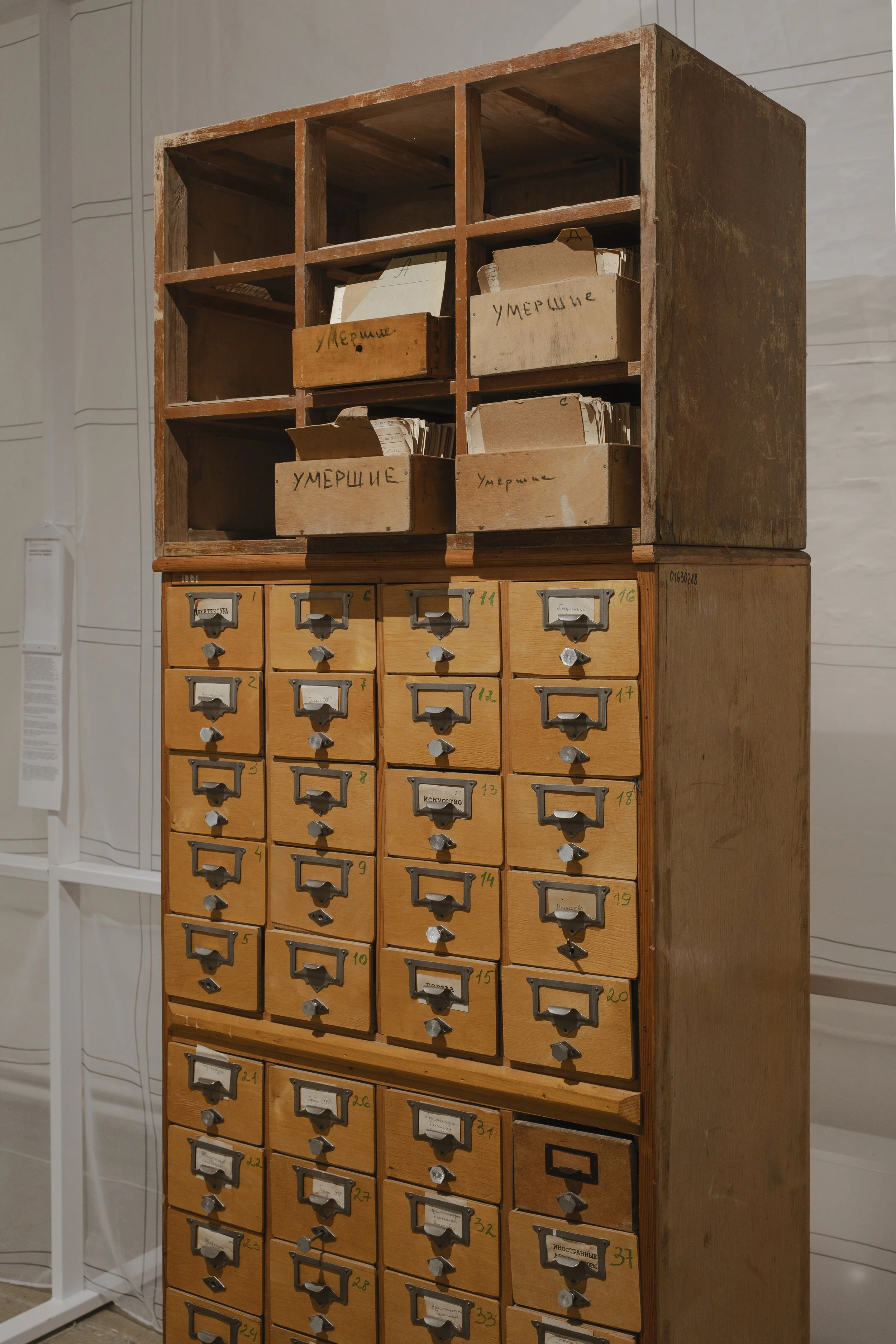
Inspired by the filing cabinet of "deceased architects" within the walls of the museum of architecture, we reflect on a particular institutional form of posthumous punishment — damnatio memoriae — applied, among others, in Ancient Rome to certain categories of criminals (read: architects): usurpers of power (read: of time and space), participants in conspiracies (read: collectives and unions), and emperors who had disgraced themselves (read: demiurges). Any material evidence of a person's existence — statues, wall and tomb inscriptions, mentions in laws and chronicles — was to be destroyed, to erase the memory of the deceased.
The Senate of the Roman Empire had the right to pardon or condemn, to declare someone unworthy, to condemn them to oblivion. Who dons the toga with the purple border today?
# 1
A filing cabinet is an object designed for storing documents in folders or drawers. This object implies the systematization, classification, and in some cases indexing of its contents, for the sake of quick retrieval of the data and information contained within its folders and drawers.
The cabinet — a guardian at the waters of the River Lethe in the underworld of our memory — the index "deceased" offers hope for … a silent presence in someone's fleeting or inquisitively contemplative gaze.
voicelessness, silence, speechlessness…
# 2
The filing cabinet is meek — its silence is akin to passivity. Are we condemning someone, or are we condemning ourselves for forgetting someone… The index "deceased" is inevitable. The filing cabinet is the perpetual sentinel at its post.
But it is not this that is hard — to avoid death; it is much harder to avoid moral corruption, for it runs faster than death*.
*Plato / Apology of Socrates
# 3
The speechlessness of some is always more than compensated by the fanatical (frenzied / impassioned) desire of others to speak out.
Tabula rasa — our apology, words in our defense.
If they think they are something when they are nothing, reproach them just as I reproached you, for neglecting what they should care for, and thinking they are something when in reality they are nothing*.
*Plato / Apology of Socrates
Epilogue
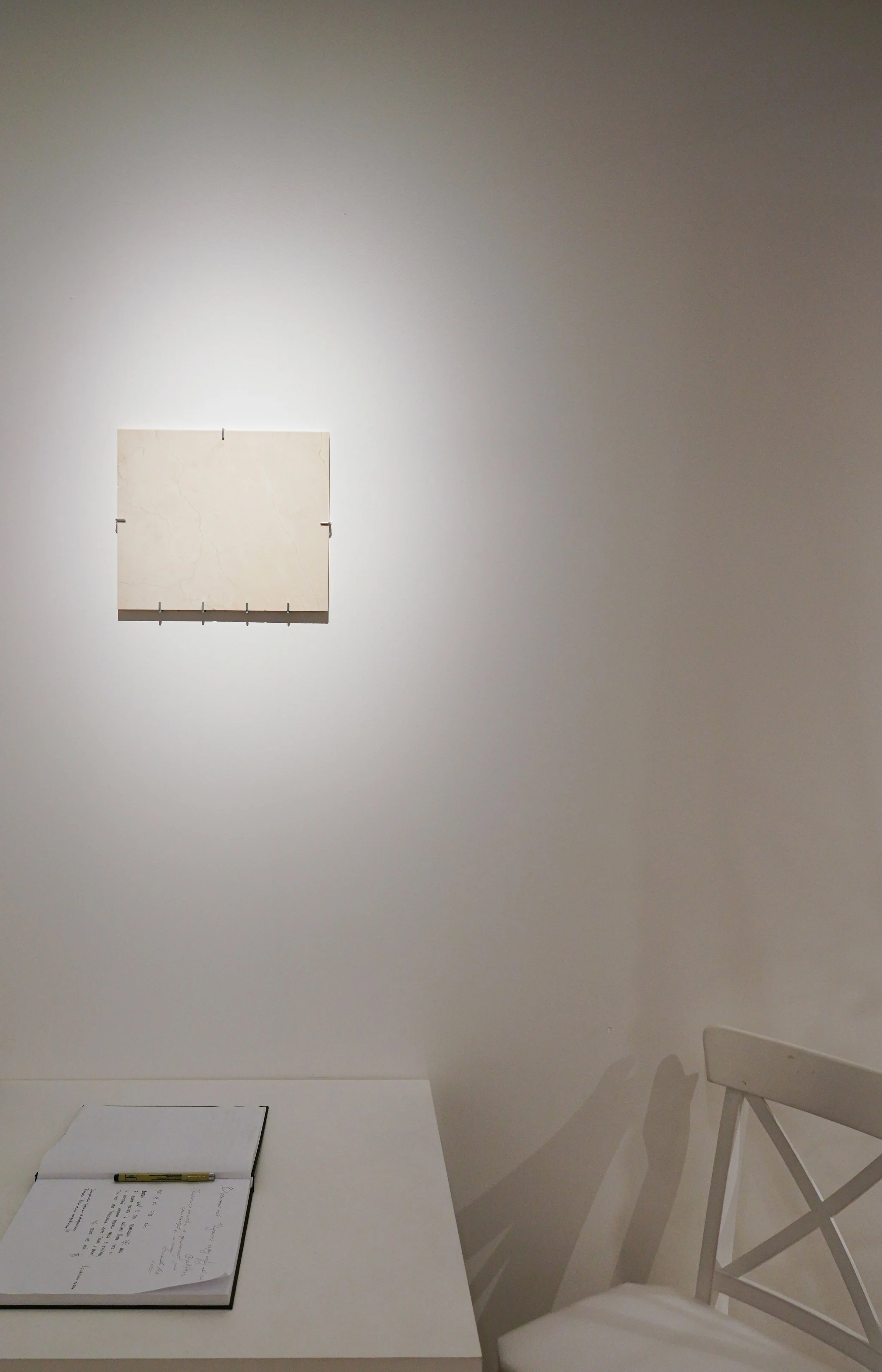
In the space of the Aptekarsky Prikaz, an attentive visitor will discover a stone tablet. Although the marble of the slab is rough and even coarse, without shimmer or shine, as if dusty… its characteristic veins will draw your gaze. Hold it for a moment… The tablet — a tabula commemorativa to those who have sunk into Lethe — with longing in our hearts and fire in our eyes, we remember the architects whose voices we cannot discern through time.
Team: Mikheil Mikadze, Evgenia Udalova, Olga Talamanova
Photography: Evgenia Baranova, Vlad Ladygin