Archaeology of Myth
2026
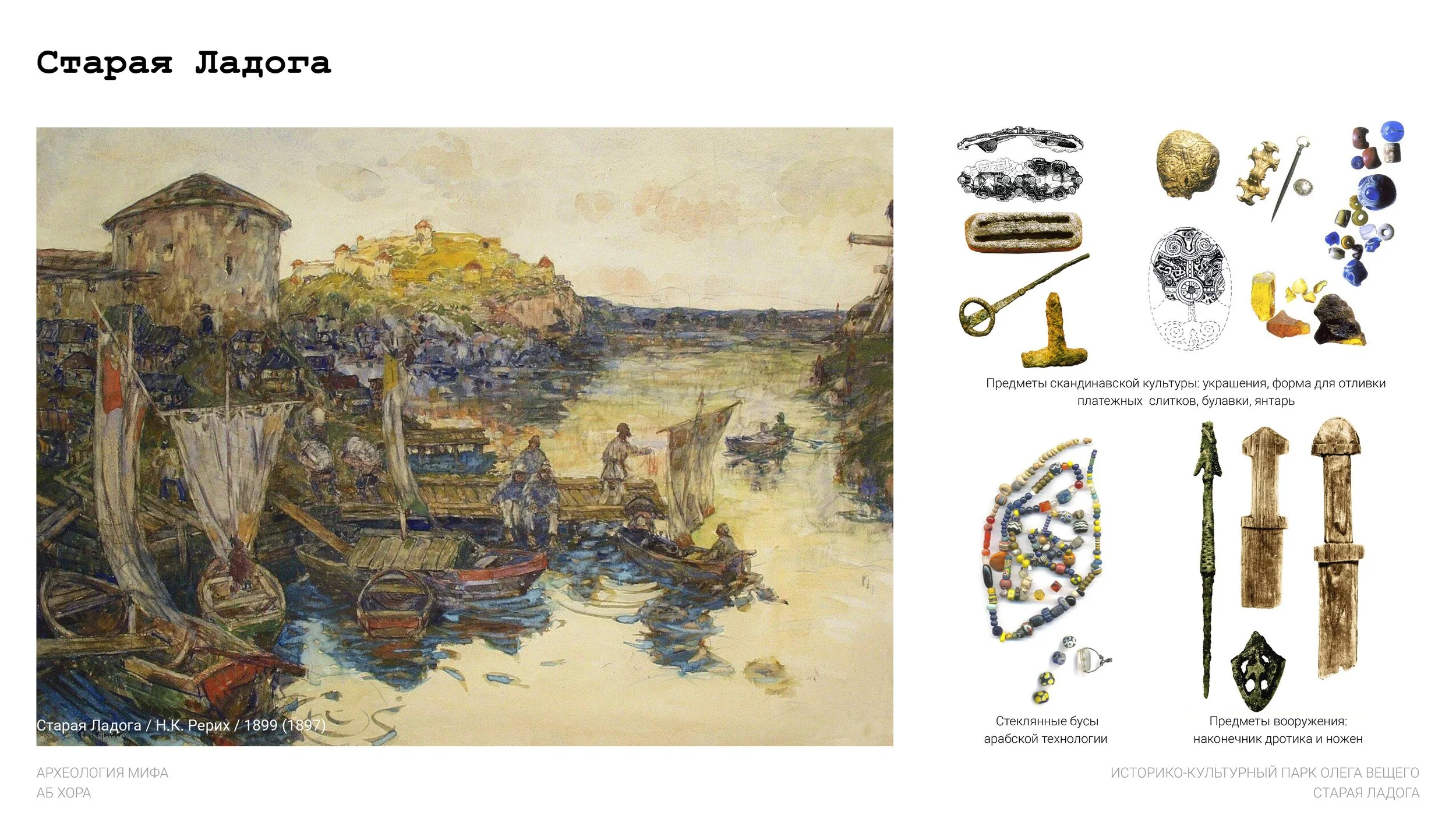
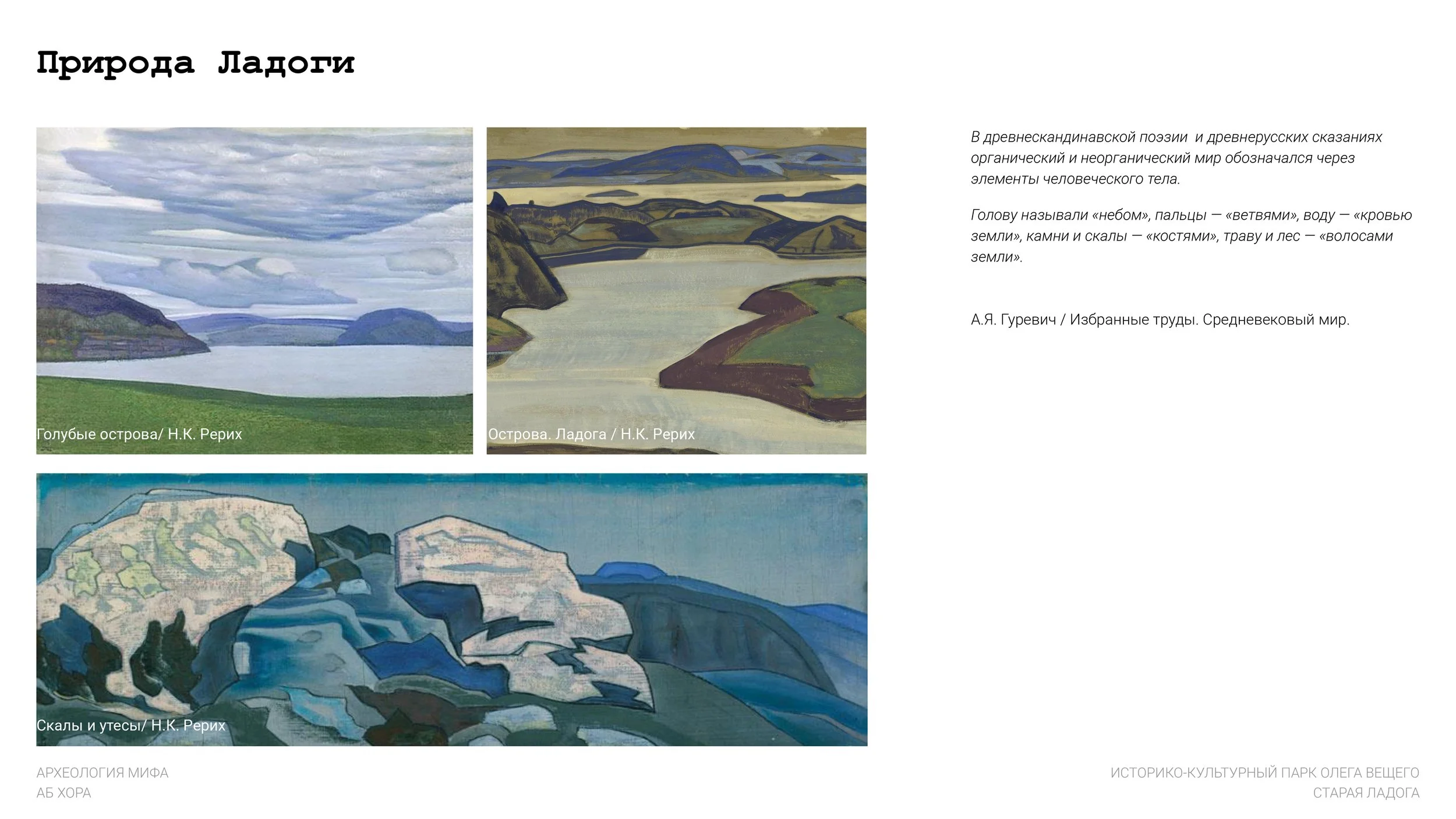
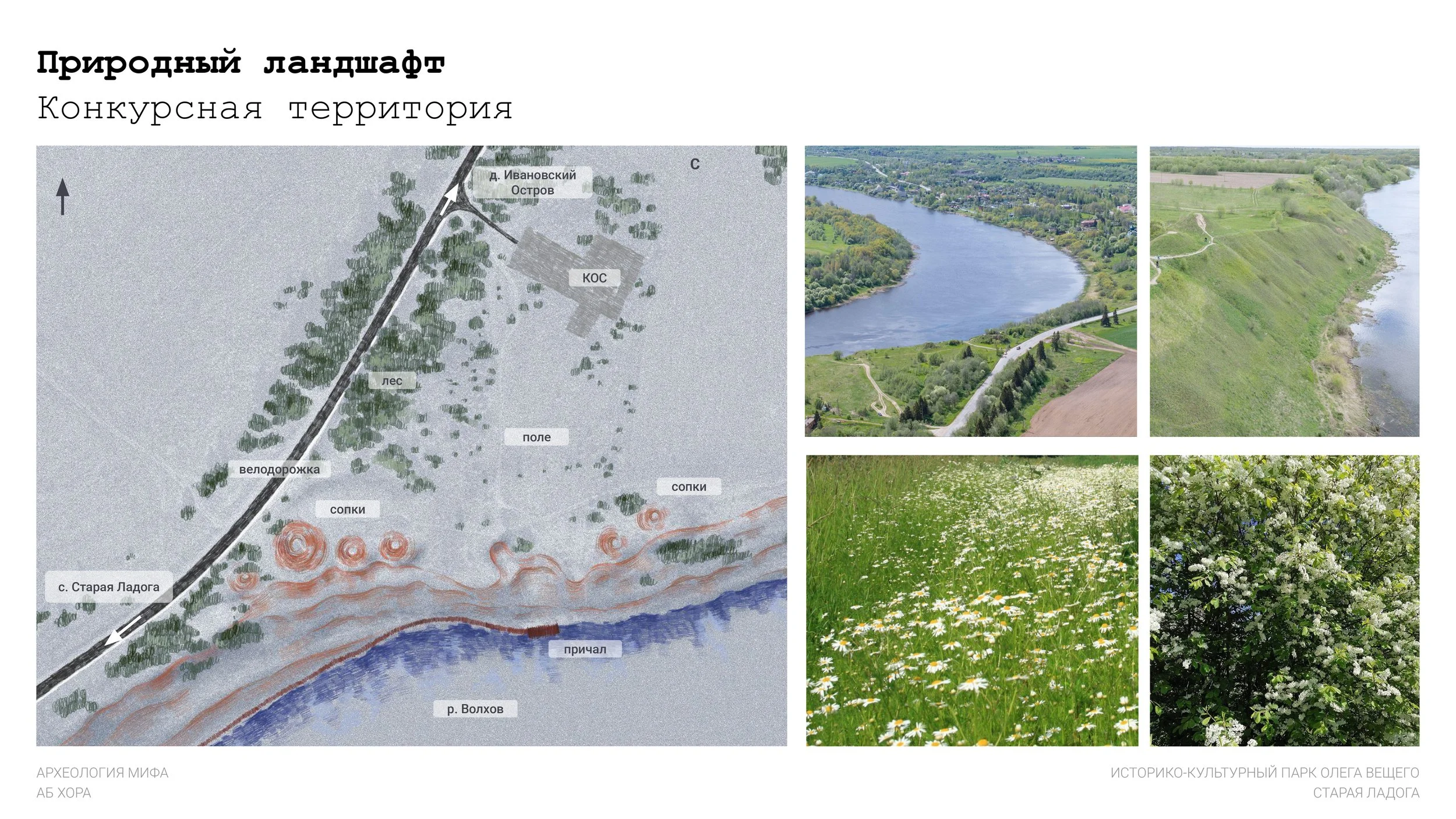
The Archaeology of Myth concept reimagines the historical park as a living medium where history, myth, and nature converge. Staraya Ladoga was once a medieval crossroads of trade, crafts, and beliefs. Its unique landscape—high riverbanks, steep slopes, and wild meadows—is not just a backdrop but an active participant, reflecting a worldview in which humans belong organically to nature. Interestingly, the competition site contains no archaeological cultural layer, which paradoxically elevates the role of landscape and legend.
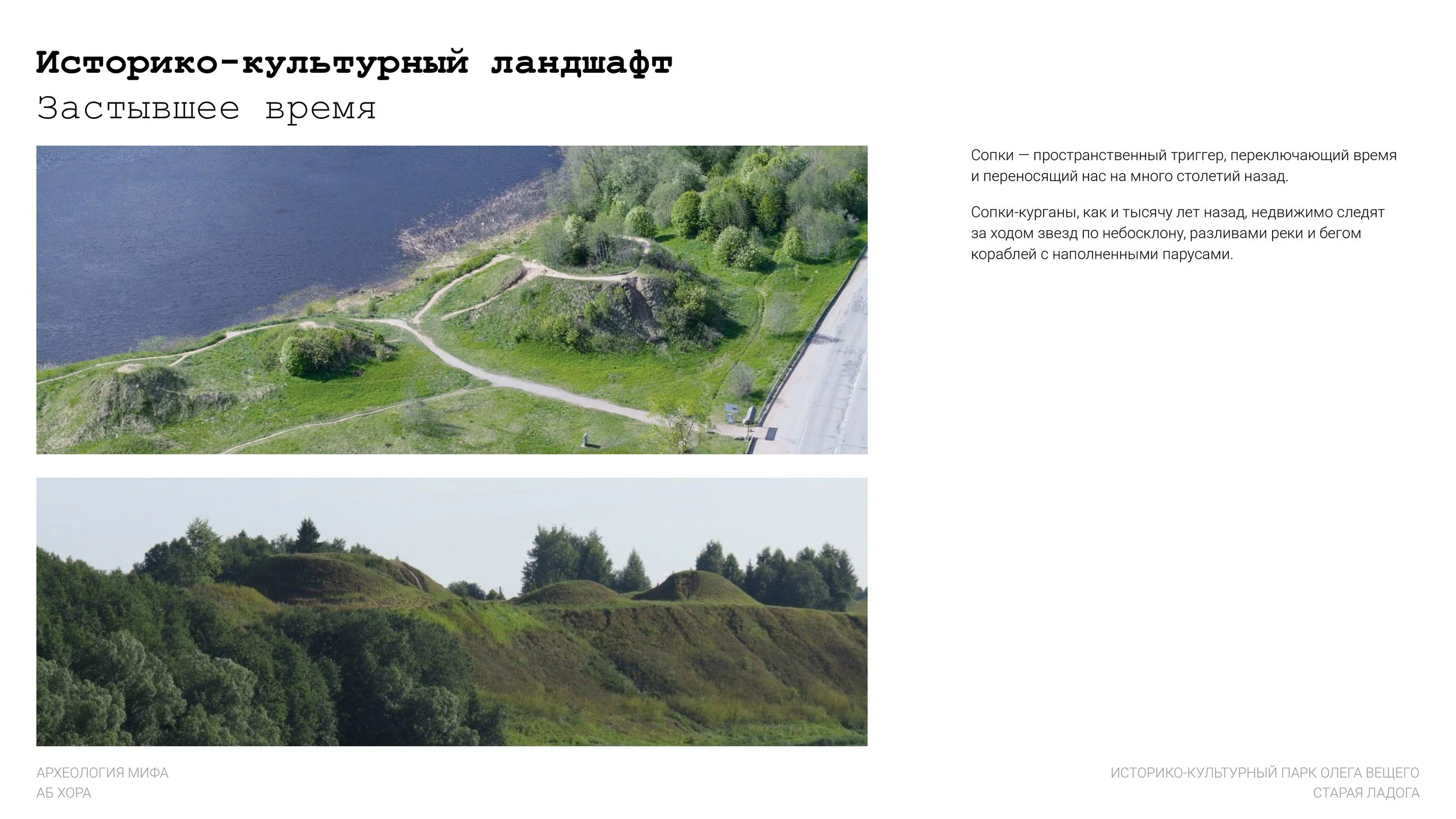
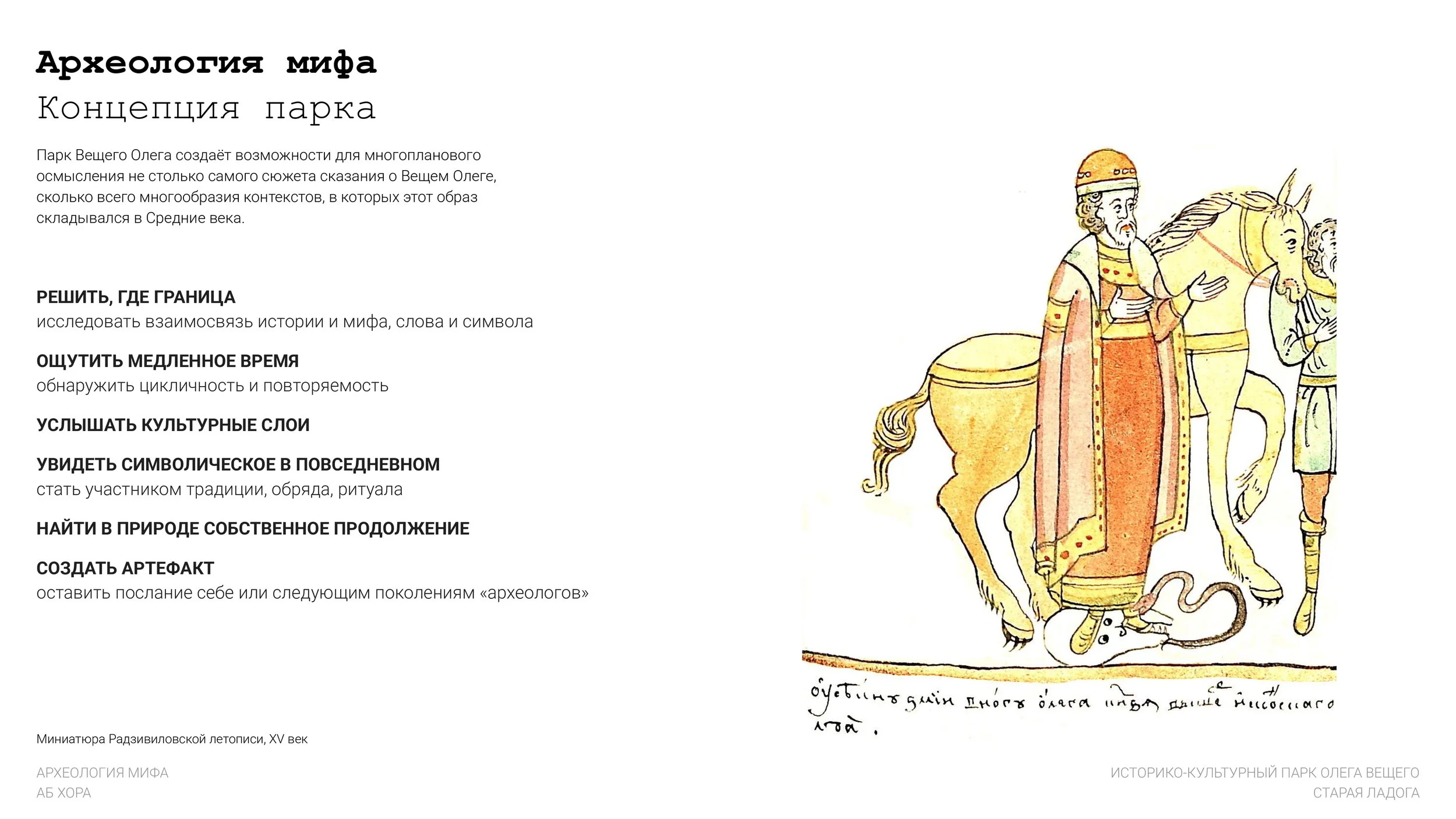
The park’s dominant spatial and semantic feature is the group of 8th–10th century burial mounds (sopki). These mounds witnessed Ladoga’s rise and decline and serve as conduits from the past to the present, from myth to reality. Local legend identifies the largest mound as the resting place of Oleg the Prophet—both a historical and epic hero.
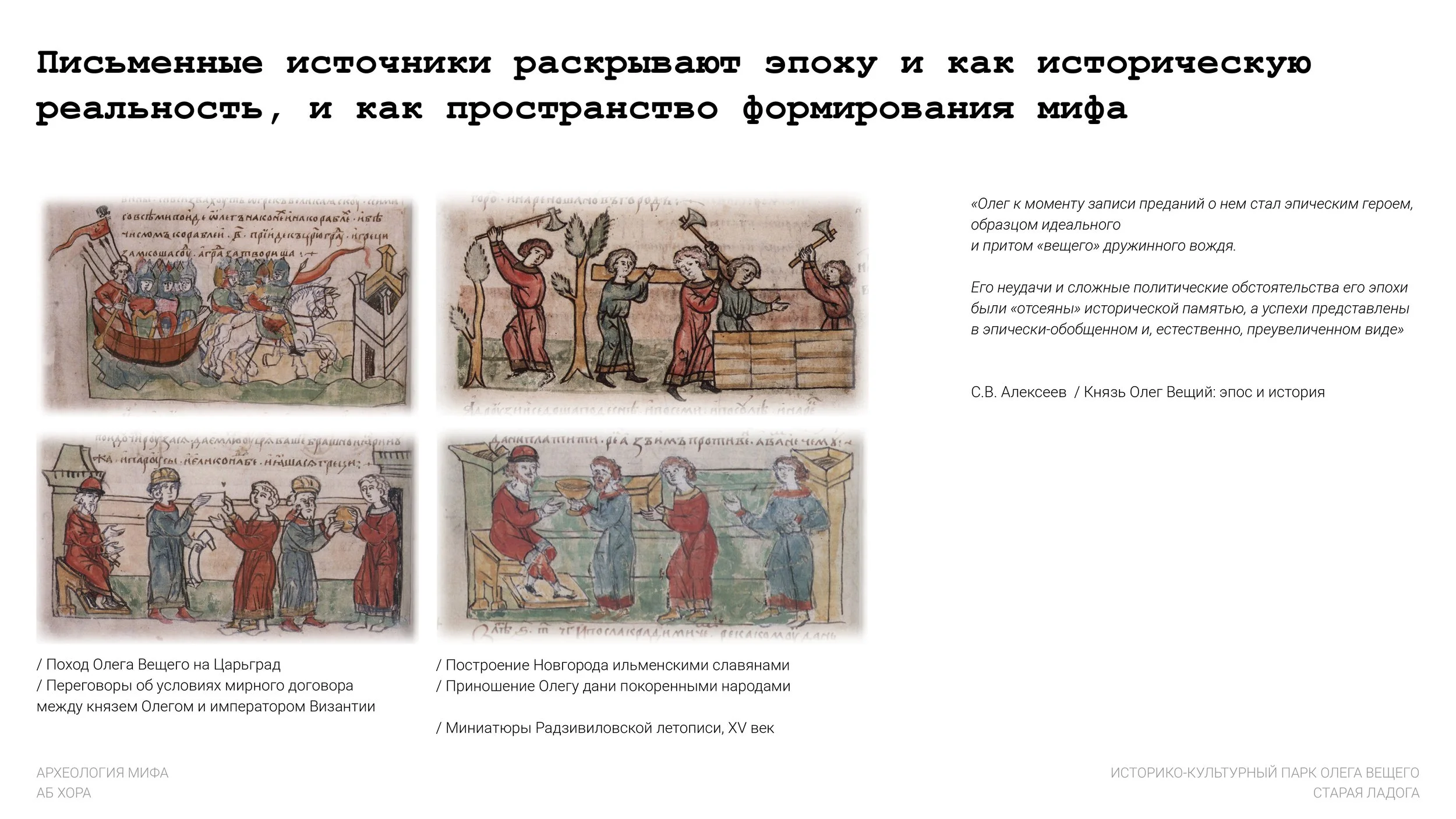
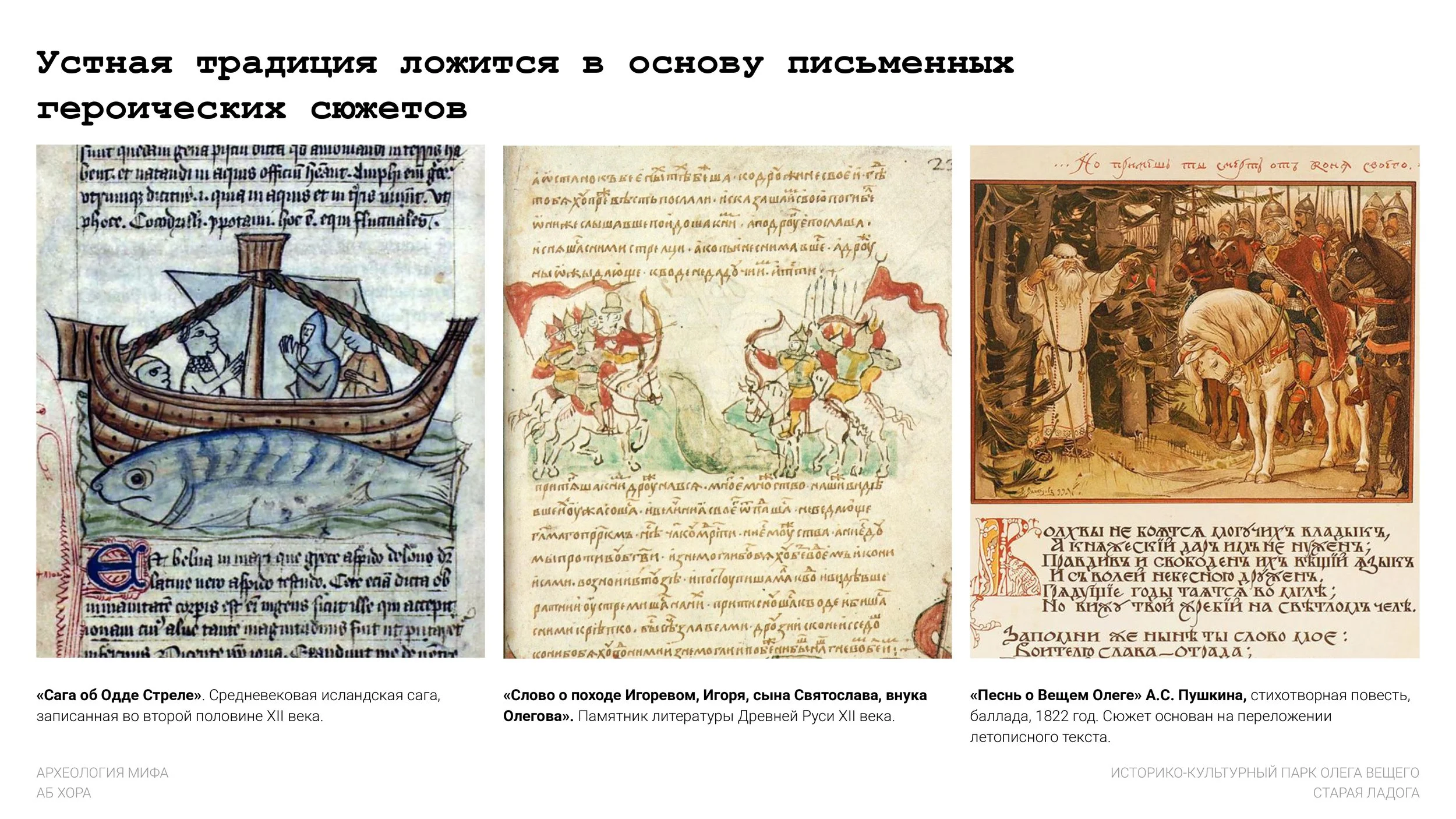
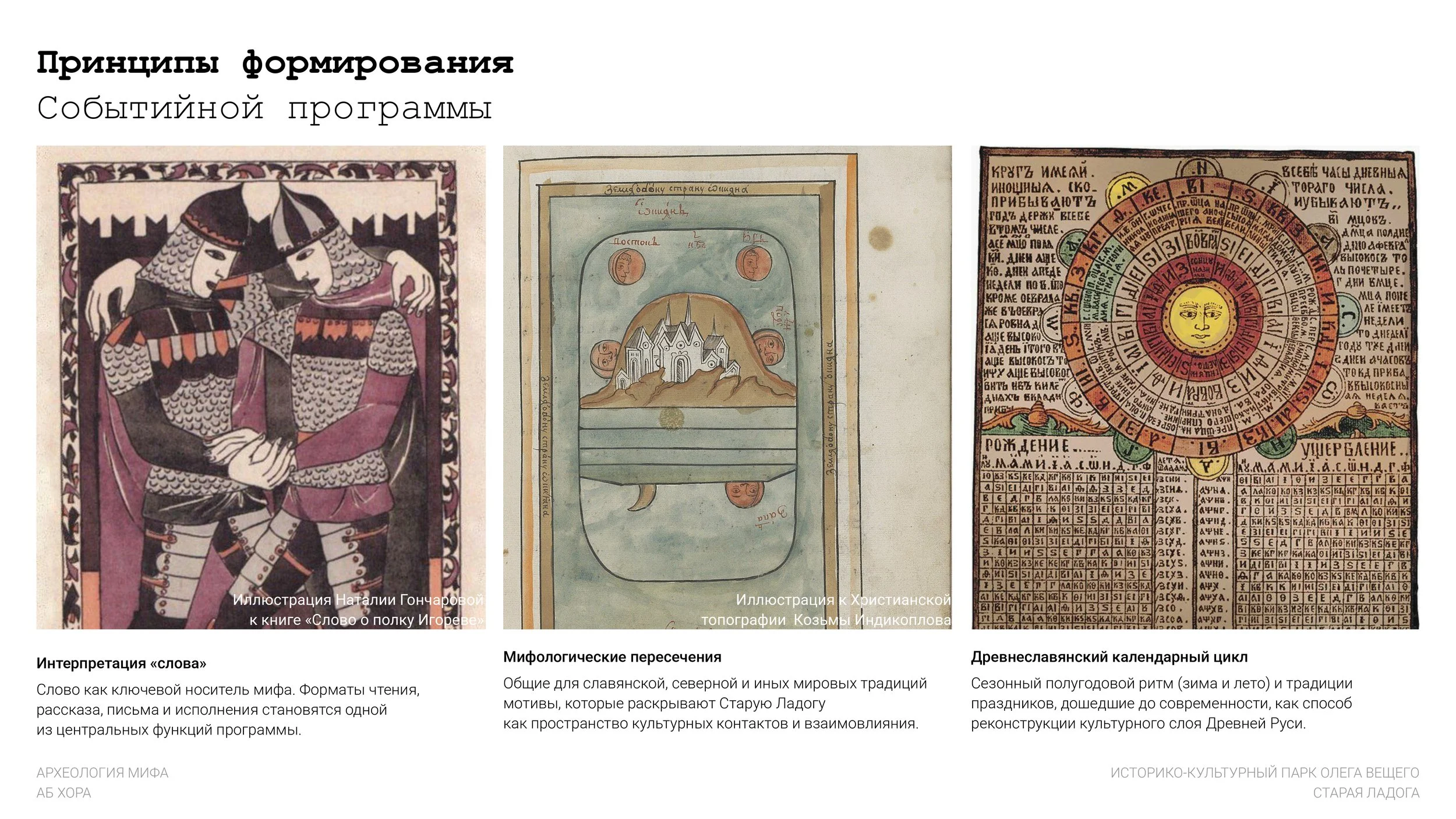
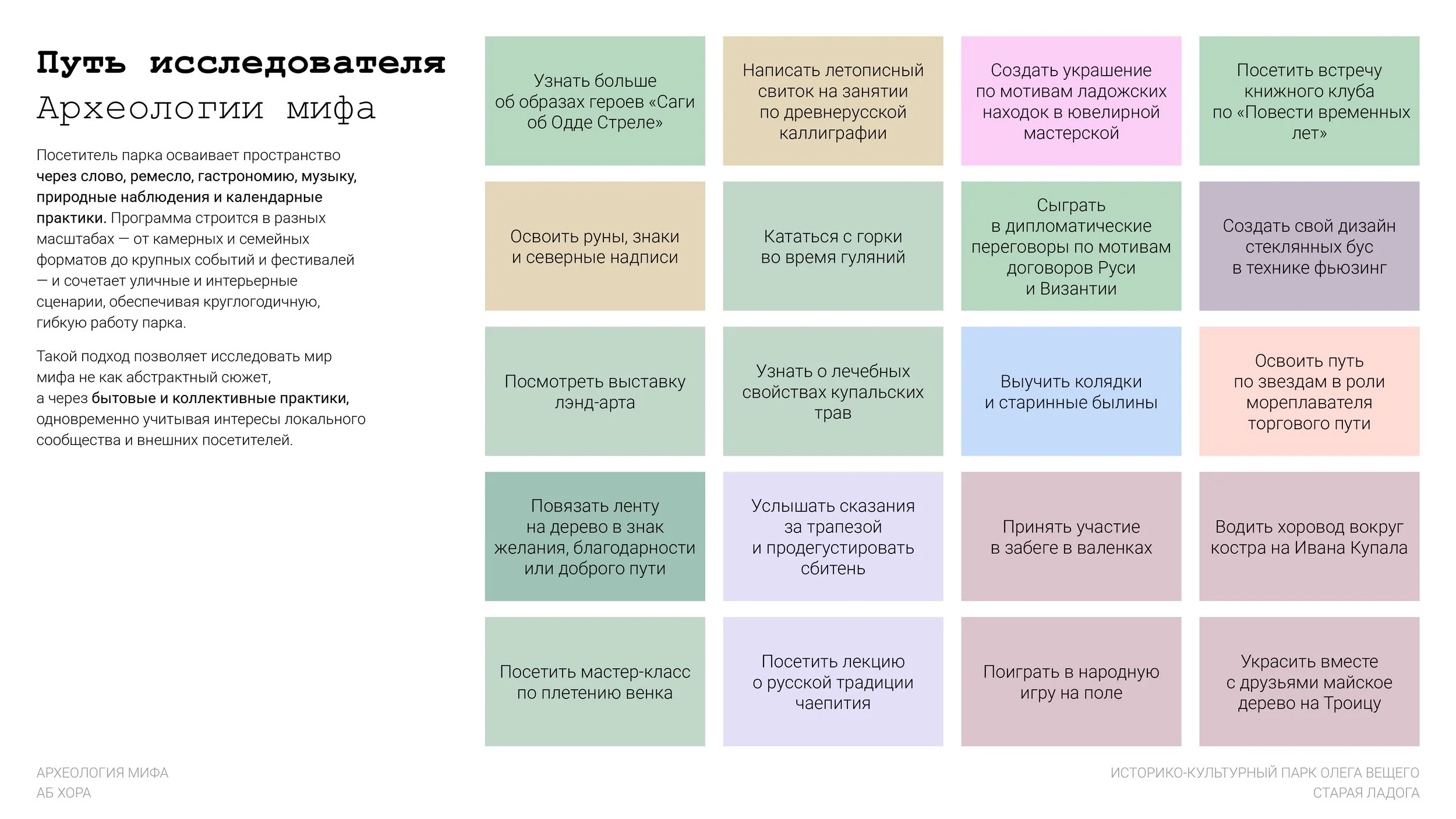
The project draws on written sources (chronicles, treaties) and oral traditions (Eddic poetry, byliny, sagas) to trace how real events transform into heroic narratives.
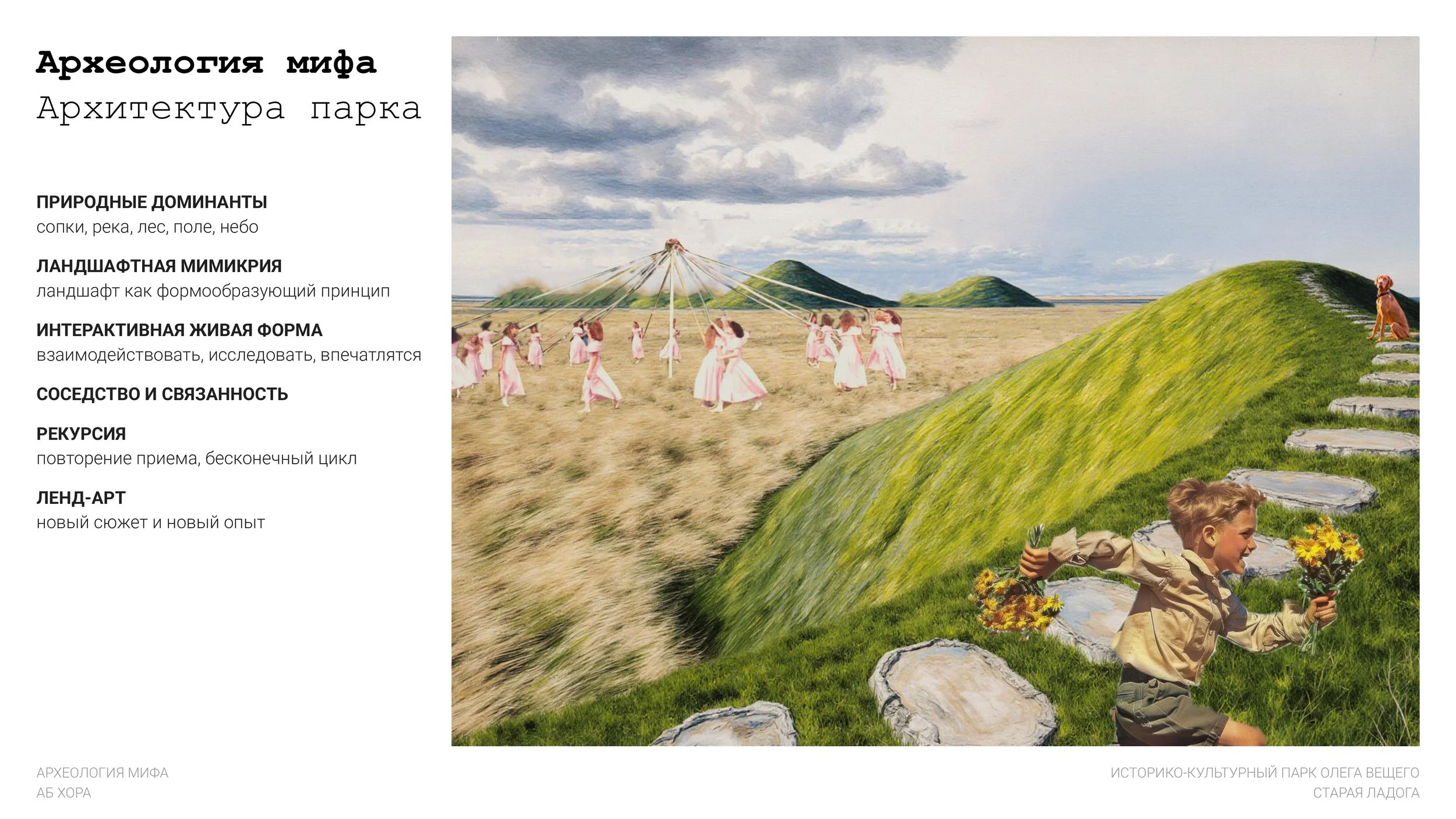
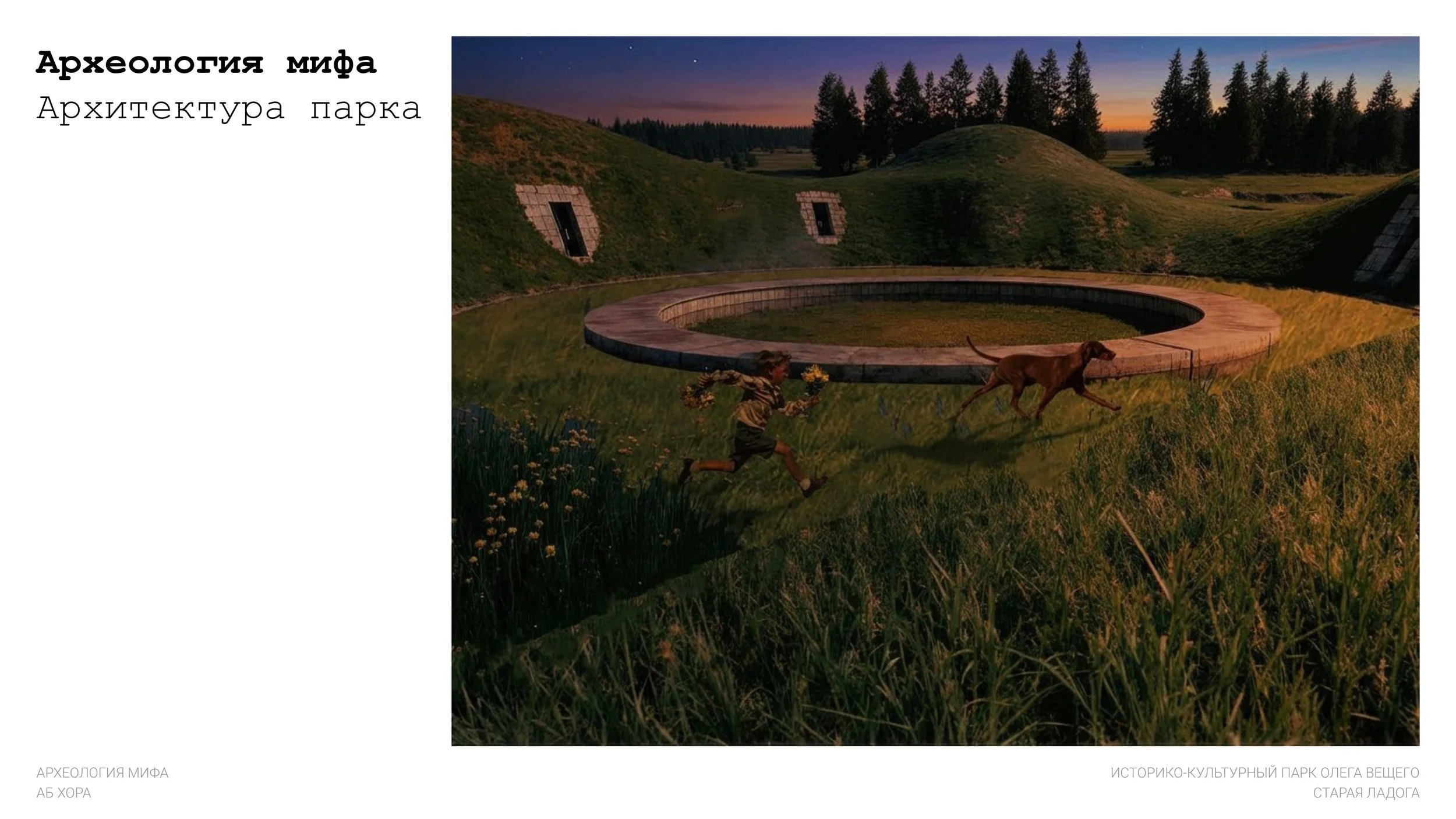
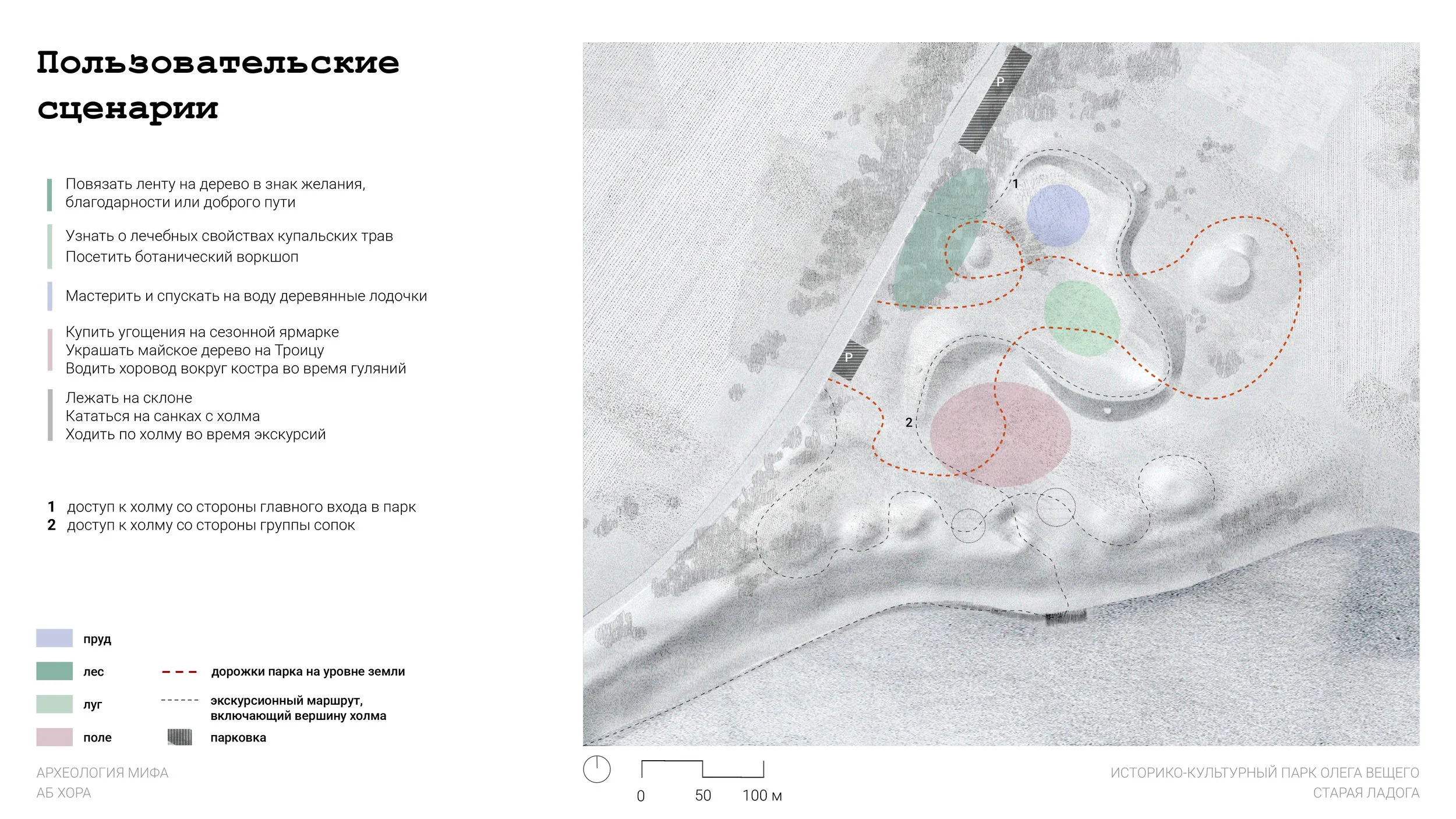
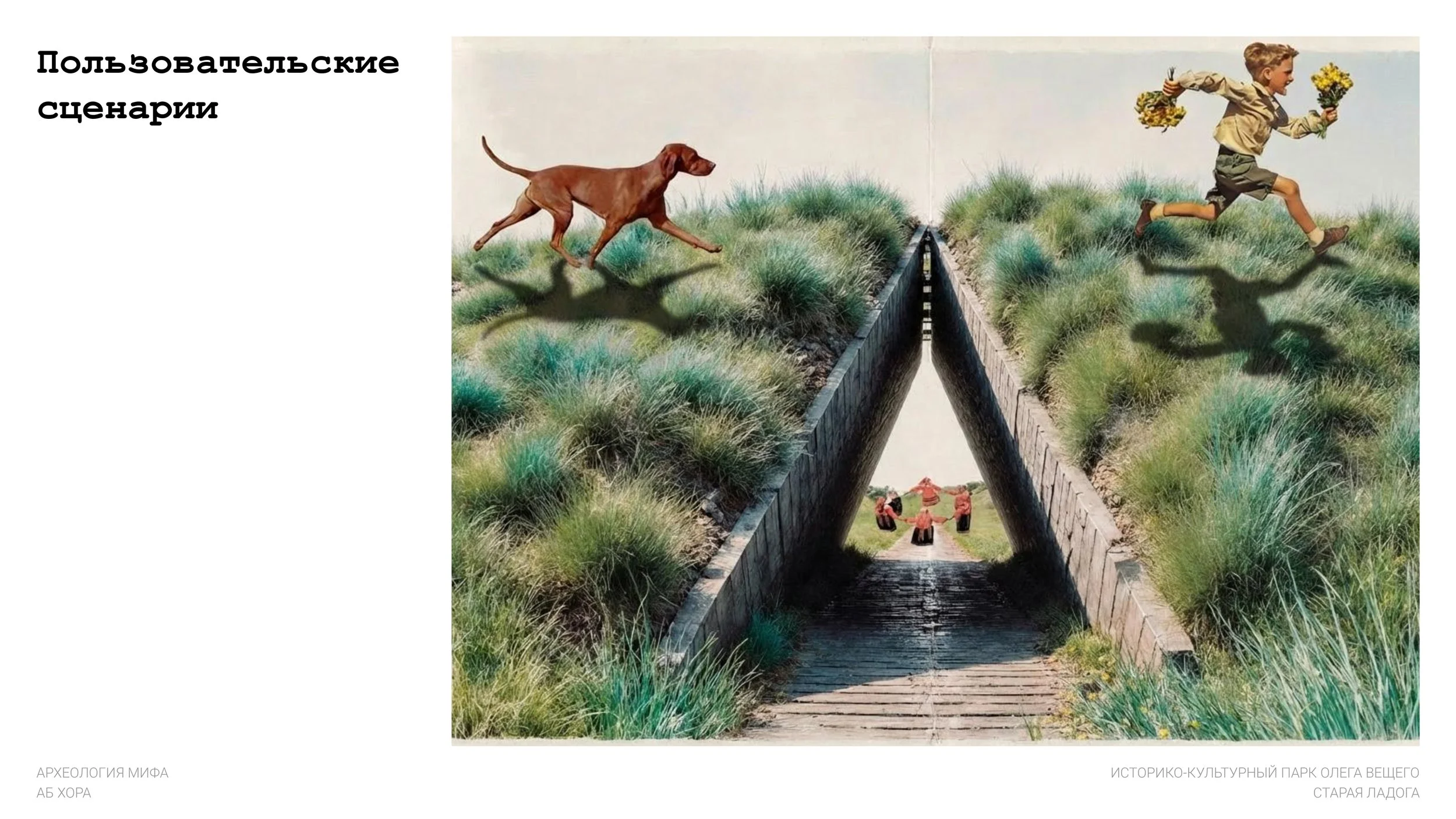
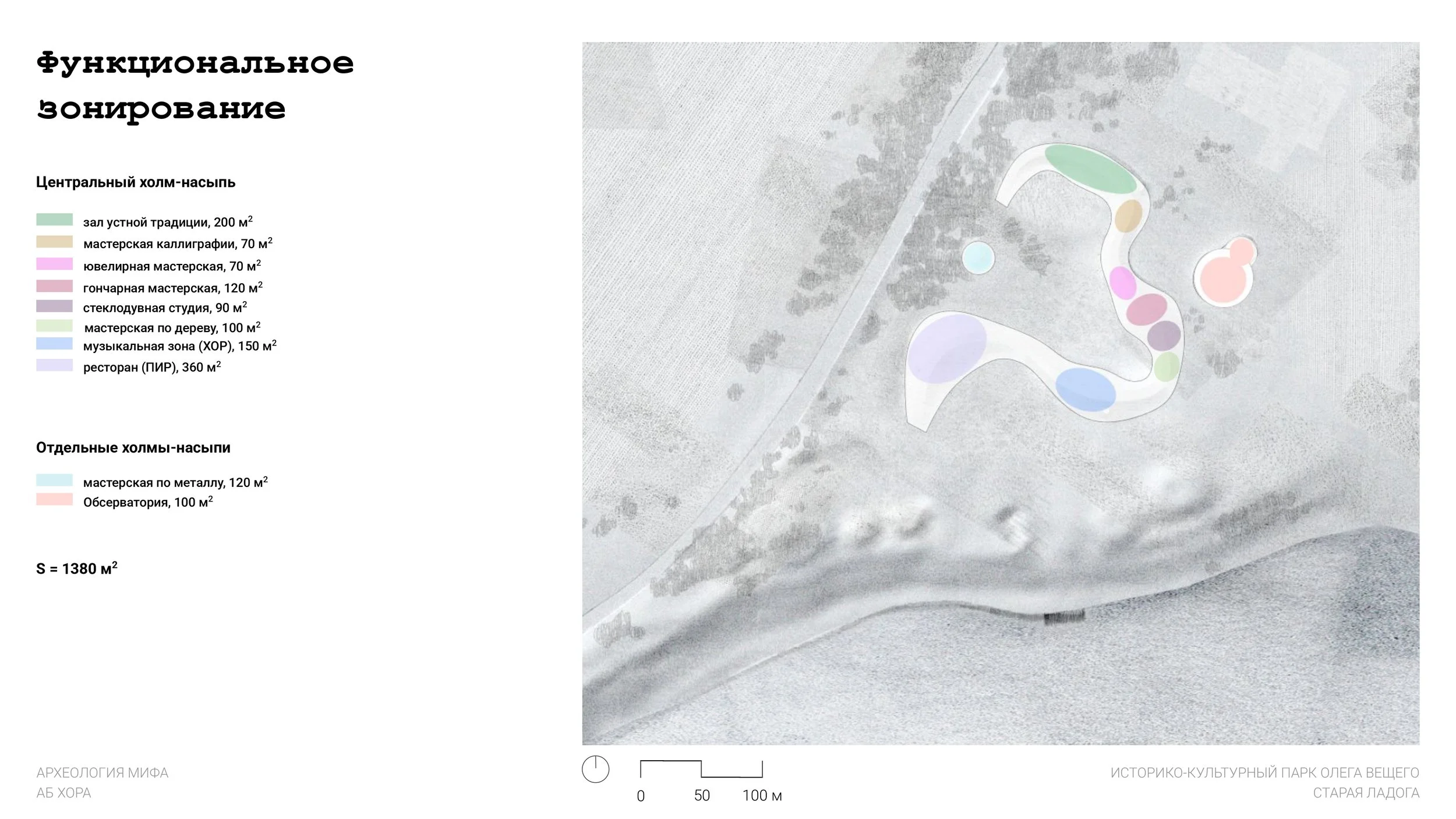
Architecturally, the park avoids false historical reconstructions. Its core is an artificial north–south embankment that echoes the natural mounds. Most programs are hidden inside or beneath the earth. Tunnel passages pierce the embankment, connecting thematic zones without climbing the historic mounds. Inside are a hall of oral tradition, a calligraphy workshop, craft studios (jewelry, pottery, glass, wood), a feast hall, an observatory, and a separate metal workshop in its own mound.
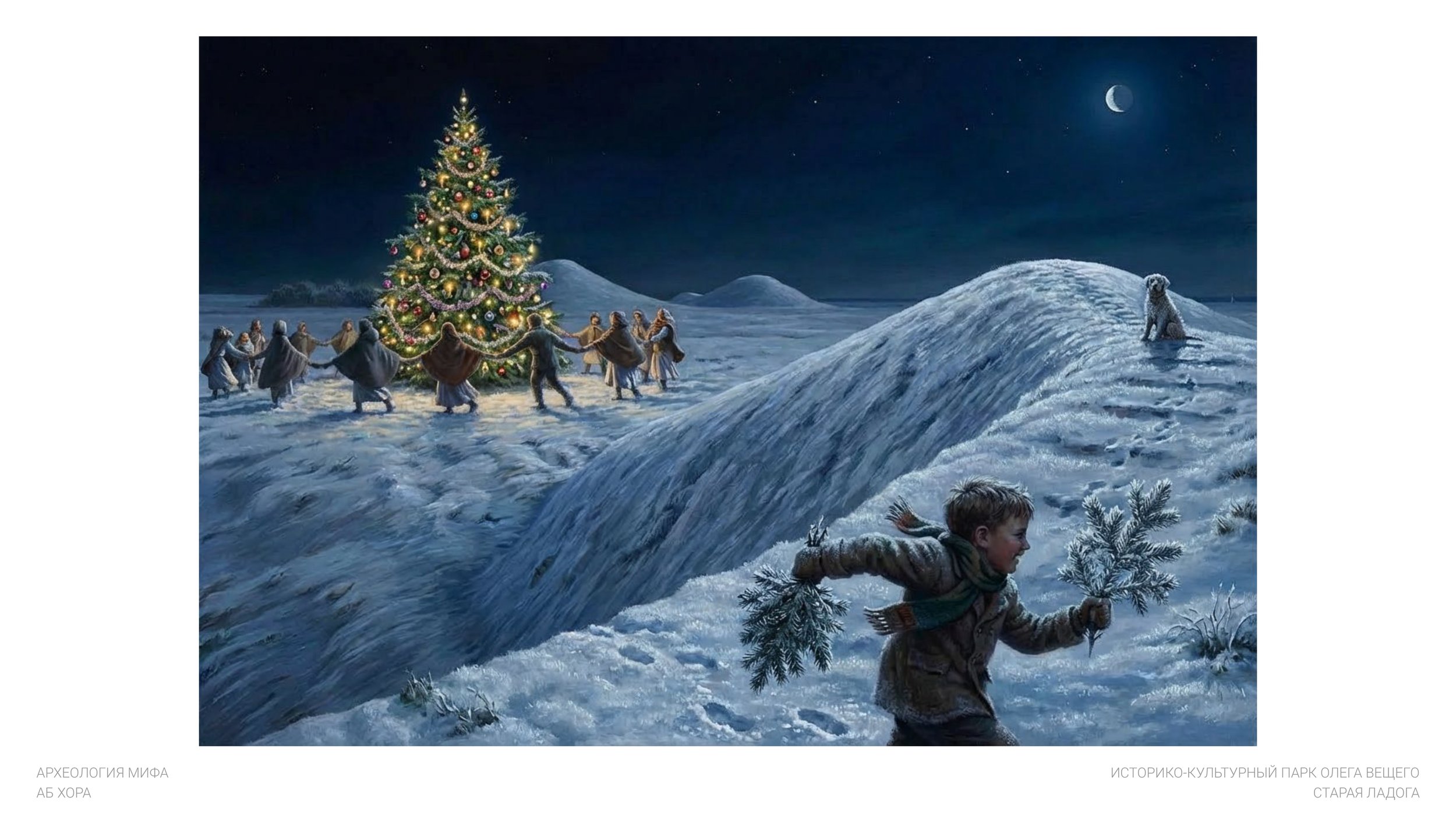
Outside, the field hosts festivals, while meadows, forest, ponds, and hills offer quiet, contemplative spaces. In winter, sledding and active games keep the park vibrant for both tourists and locals.
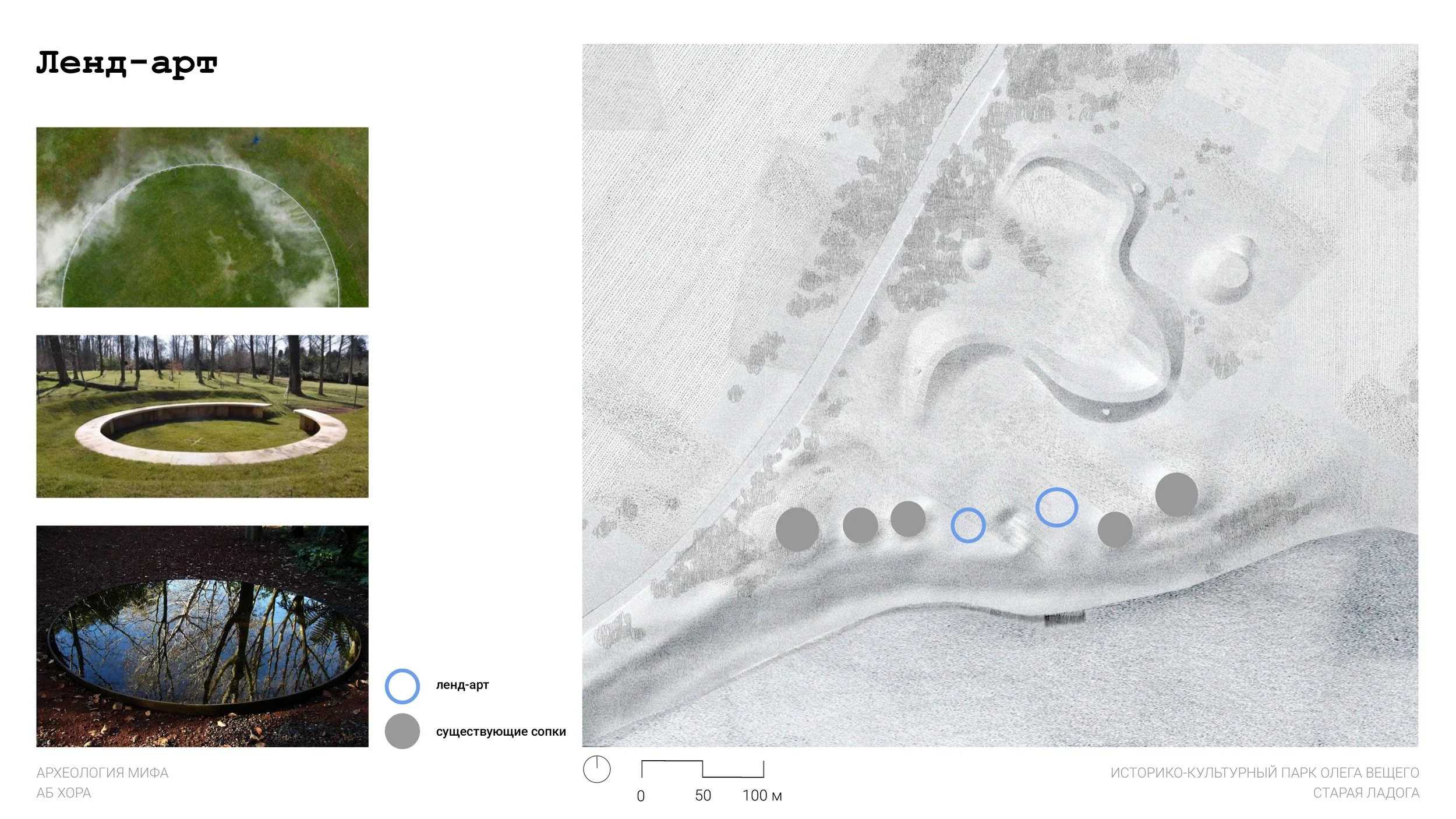
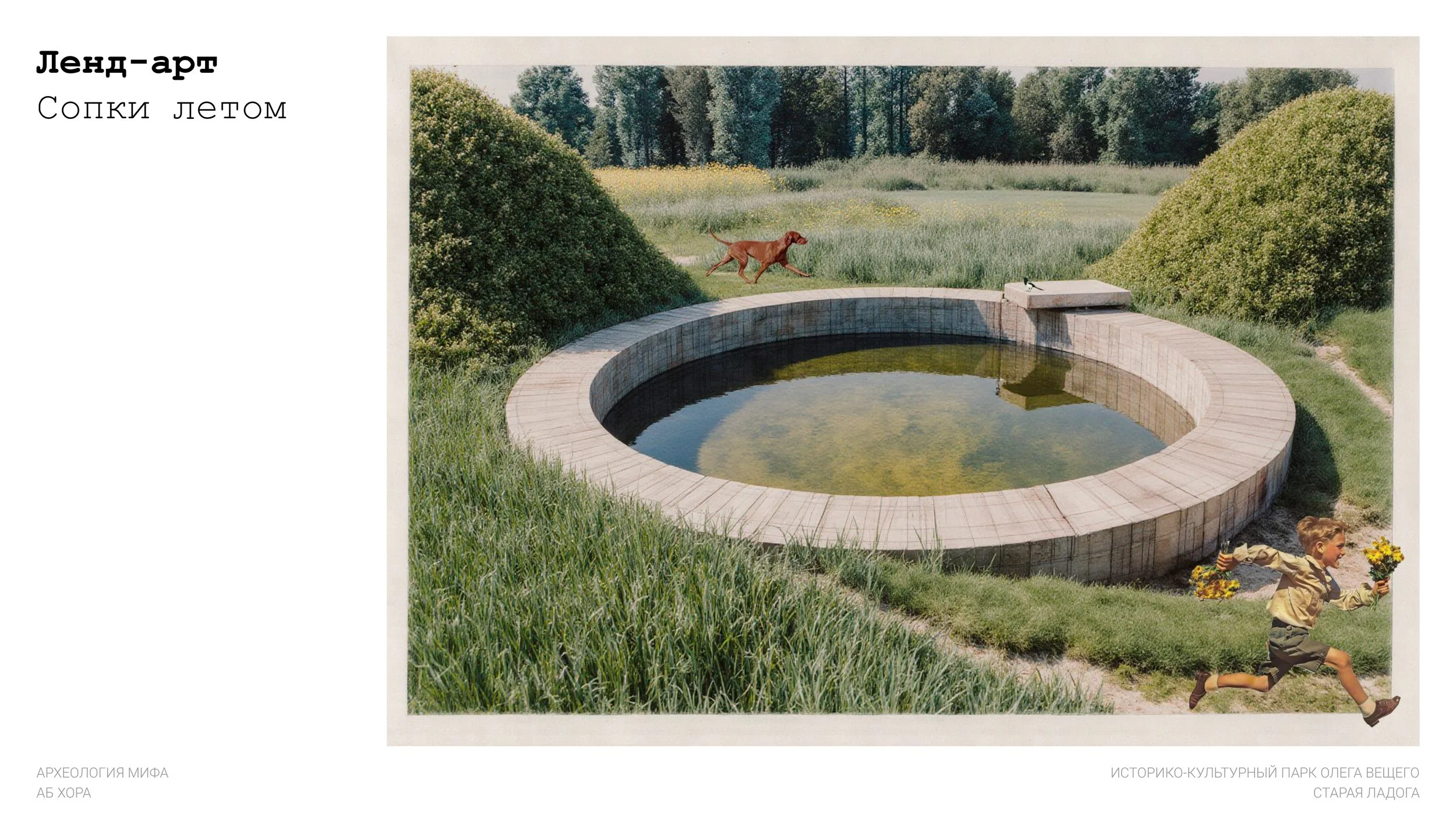
All interactive scenarios are deliberately transferred from the authentic archaeological mounds to artificial hills to preserve the originals. Beyond the competition site, planar land art objects—such as a water mirror and a landscape amphitheater—connect two groups of mounds, forming symbolic propylaea from the pier and promenade without invasive intervention.
The Archaeology of Myth turns the park into an interactive narrative of memory, where the past is not a distant museum relic but an immersive, personal journey along the shifting border between fact and legend.
Team: Mikheil Mikadze, Evgenia Udalova, Marusya Golodova, Nina Komrakova, Polina Timoschenko, Maria Apostolova